Montessori
Why Montessori?
We know parents have choices when it comes to their children’s education. We know these choices are not easy. Why do so many families choose Montessori?
Montessori education has been successfully serving children and families around the world for over a century. The basics remain - and for good reason. Our methods are consistently backed by current research in education and human development. As we move forward into a new future, we believe Montessori has what it takes to prepare children.
why wsms?
what makes montessori so special?
Montessori meets children where they are, without judgment
Montessori recognizes that every child develops and learns at their own pace. Children are not expected to master the same skills at the same time or follow a predetermined path of learning. Instead, Montessori educators carefully observe each child to understand their individual strengths, needs, and interests, providing the appropriate support and challenges to help them grow.
Children who need more time and practice with a skill receive that support, while children who are ready for greater challenges are able to continue moving forward. By meeting children where they are, without comparison or judgment, Montessori creates an environment where every child feels valued, capable, and empowered to reach their full potential.
Montessori emphasizes more than just academics...
Montessori education is designed to support the development of the whole child, not just academic skills. While children build a strong academic foundation, equal attention is given to their social, emotional, physical, and practical development. Through everyday experiences, children develop independence, problem-solving skills, creativity, empathy, and the ability to work respectfully within a community.
The arts, movement, grace and courtesy, and practical life skills are woven throughout the Montessori experience rather than treated as separate subjects. At the heart of Montessori is the belief that education should help children understand themselves, their communities, and their connection to the wider world.
...but the academics are a huge strength
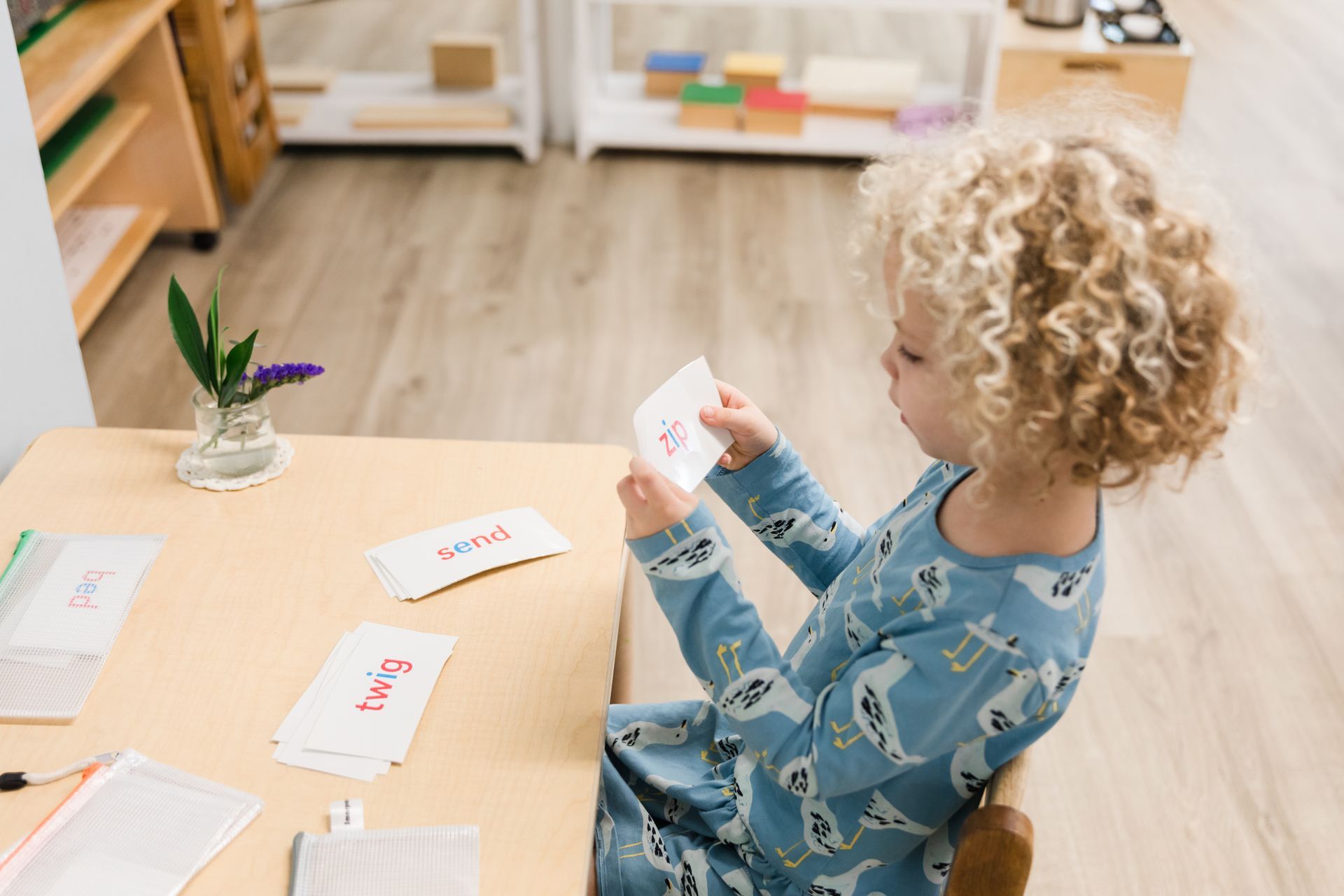
The above mentioned being said, Montessori academics are often hailed as some of the highest standards there are. It is not uncommon to see four-year-olds in our schools reading, six-year-olds completing long division problems, and nine-year-olds classifying botanical specimens. These tasks are completed joyfully, in part because we present information in such a way that children dMontessori education is known for its strong academic foundation. It is not uncommon to see four-year-olds reading, six-year-olds completing long division problems, and nine-year-olds classifying botanical specimens. These accomplishments are possible because Montessori educators carefully observe children’s development and introduce concepts during sensitive periods—times when children are especially ready and motivated to learn.
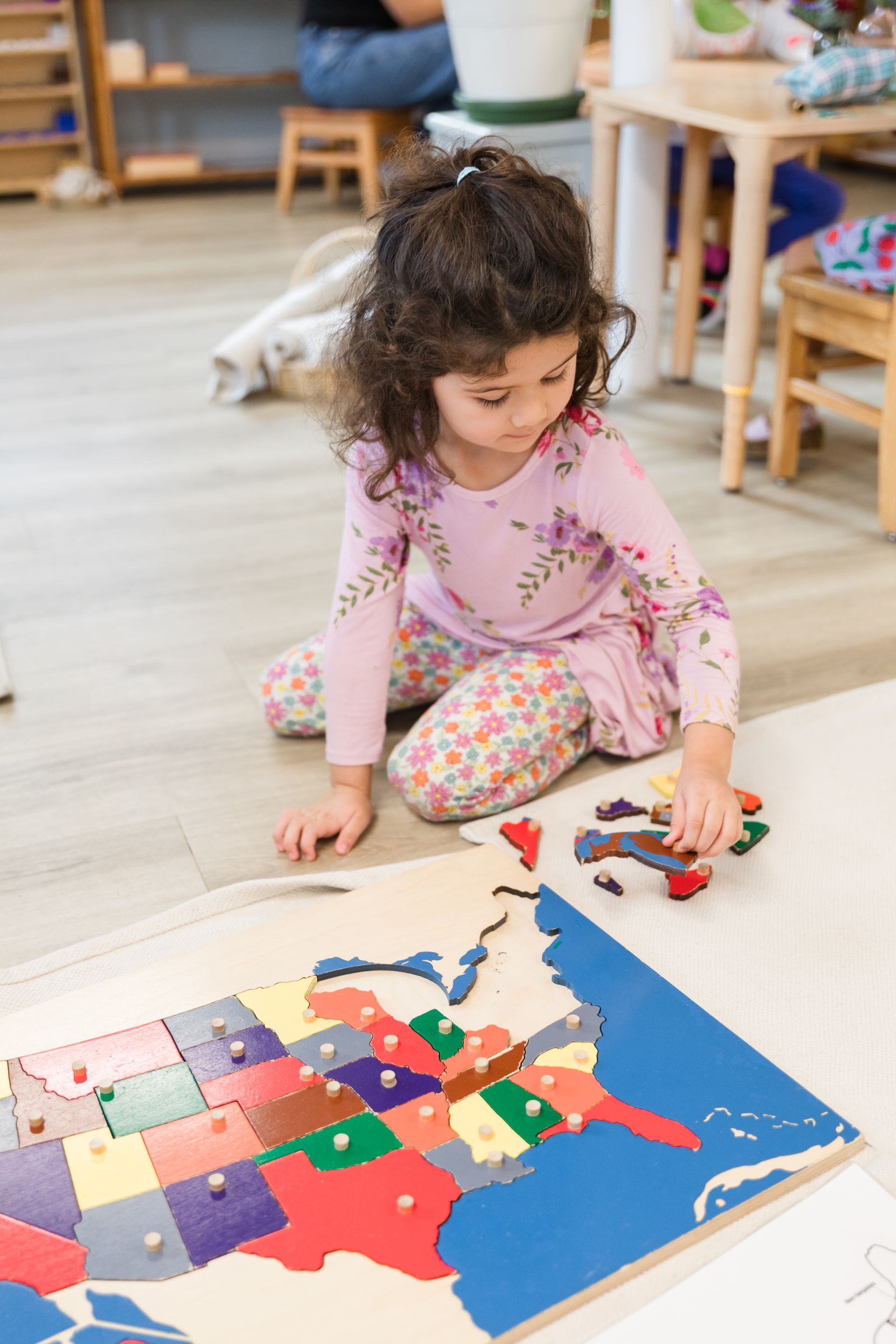
Dr. Maria Montessori discovered that young children often have a remarkable capacity to understand concepts that are traditionally introduced much later. For example, while many of us first encountered geometry in high school, Montessori students explore geometric concepts from an early age. This is why you may hear a five-year-old discussing rectangular prisms or a seven-year-old explaining the differences between isosceles, right, and scalene triangles. Through hands-on materials and guided discovery, children develop a deep understanding of academic concepts while building confidence and independence as learners.
iscover it for themselves rather than passively taking in facts given by an adult.
Another reason Montessori students seem to work at an advanced academic level is because of what we call sensitive periods. Through years of observation, Dr. Maria Montessori noticed that young children seemed primed and particularly interested and ready to develop certain skills during very specific time periods. While, of course, there is variation between individual children, she noticed some general patterns that have helped us develop our curriculum. One interesting example is that of the study of geometry. Many of us were first exposed to the subject during our high school years, when it turns out that primary- and elementary-aged children are not only interested in geometry, but have a great capacity to learn far more than we typically give them credit for. This is why you may hear your five-year-old talking about rectangular prisms, or your seven-year-old discussing the differences between isosceles, right, and scalene triangles.
WSMS cultivates community
A Montessori school is more than a place where children learn. At West Suburban Montessori School, we believe that meaningful relationships among children, families, and educators are essential to a thriving school community. We intentionally create opportunities for connection, collaboration, and shared growth, including:
- Providing guides with opportunities for professional development and collaboration with one another
- Connecting our guides with the broader Montessori community
- Creating meaningful opportunities for families and guides to discuss each child’s growth and needs
- Helping parents build relationships with one another
- Supporting families through parent education opportunities
- Bringing our whole school community together through shared experiences
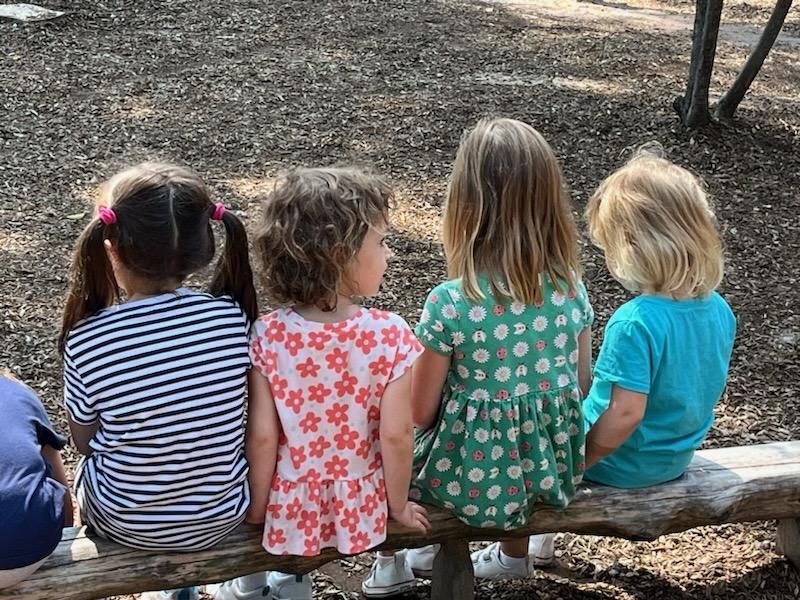
- Encouraging relationships between children across different levels
- Building connections with our local community
- Ensuring educators and families have a voice in the life and direction of the school
We believe community should not be left to chance. By intentionally creating structures that support communication and connection, we make it easier for everyone in our community to find common ground, build relationships, and feel a sense of belonging.
Montessori aims to lift up humanity
Montessori education has always held an ambitious goal: to help create a more peaceful and connected world. From the beginning, Dr. Maria Montessori believed that by honoring children and supporting their development, education could positively impact families, communities, and society as a whole. She saw education as a powerful tool for fostering respect, equality, and human potential.
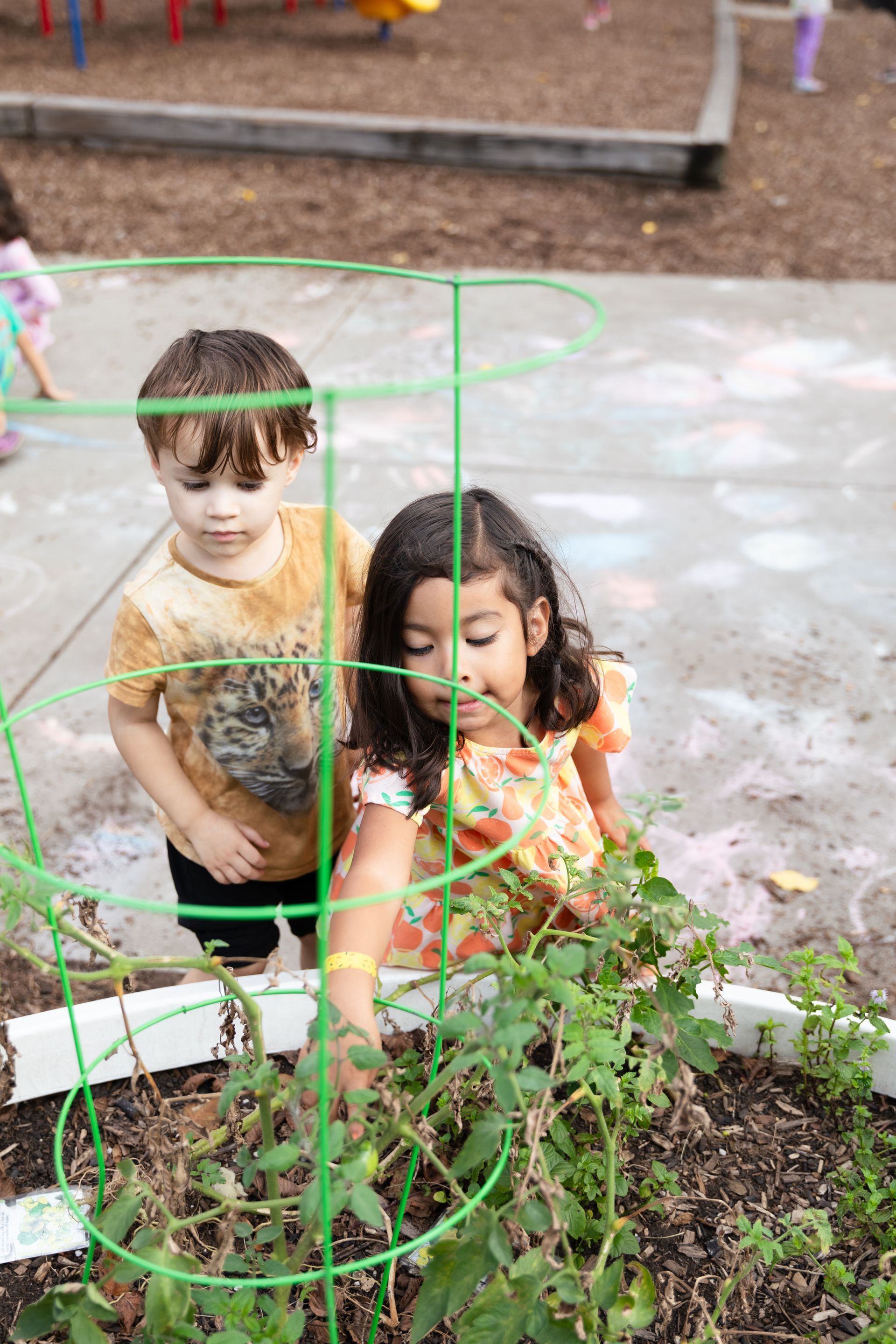
This vision begins in the classroom, where children learn to treat one another with kindness, grace, and respect. Montessori also nurtures a deep appreciation for the natural world and the diverse cultures and communities that make up our global society. Through these experiences, children develop respect for themselves, others, and the world around them.