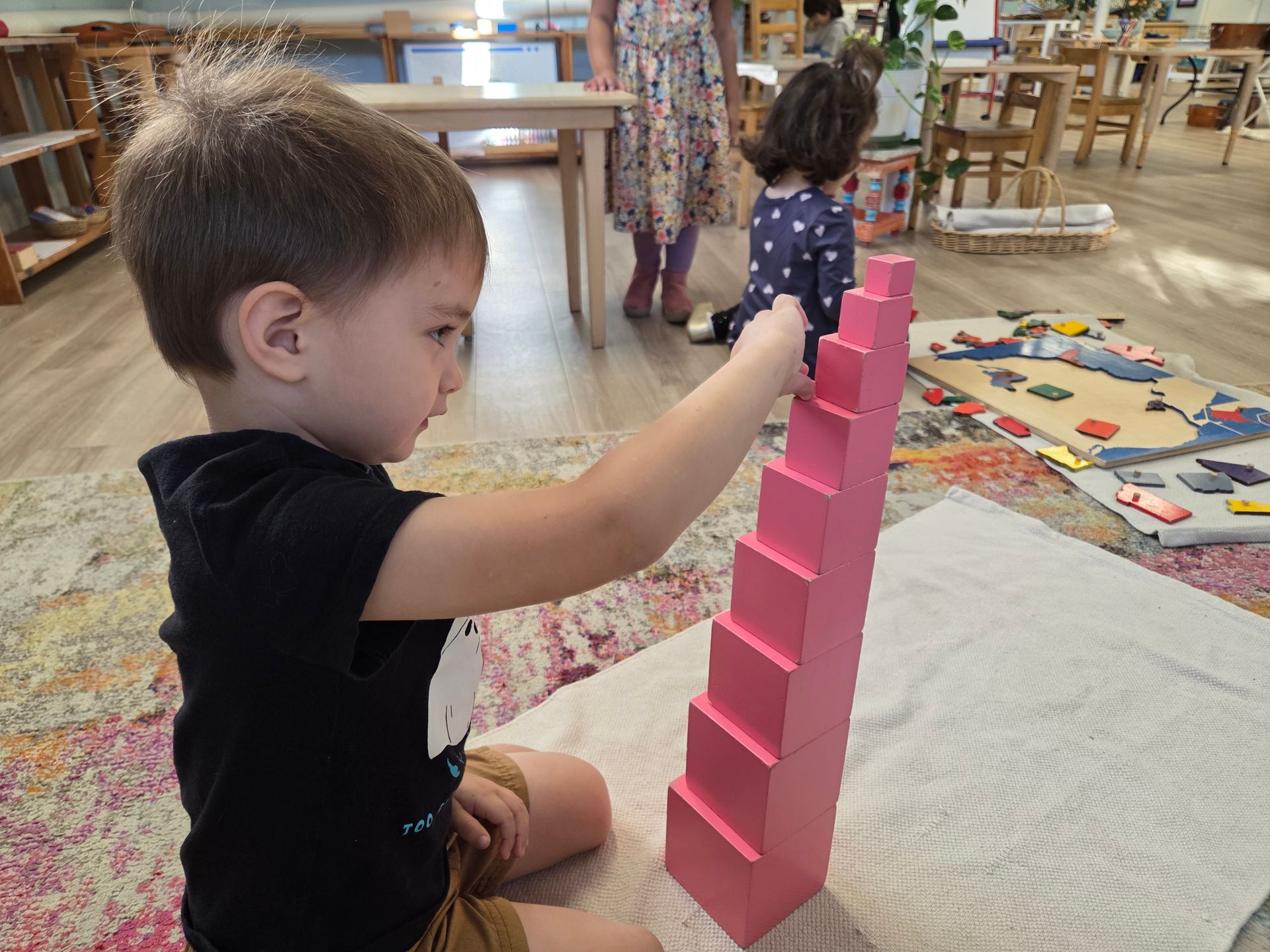
If you ever walk past a classroom at West Suburban Montessori School and see the children working intently while a guide sits quietly nearby with a clipboard, know that the guide is engaged in one of the most vital tasks in our school: the art of observation.
Why We Observe
Dr. Maria Montessori was a physician and scientist. Her background allowed her to approach human development with scientific rigor. Systematic observation of children inspired her educational methodology, and it remains the foundation of our work at WSMS today.
Our guides rely on observation to understand each child's unique developmental phase, assess mastery of skills, and carefully prepare the classroom environment.
Observation serves three primary purposes in our school:
- Planning Individualized Lessons: Montessori guides possess deep knowledge of child development. Seemingly subtle behaviors signal key transitions into new developmental phases. For example, a toddler who has mastered toileting and spends extended periods focused on practical life activities is showing readiness for the Primary environment. A six-year-old who loses a tooth and becomes deeply focused on peer dynamics is entering the Second Plane of Development and will thrive on Lower Elementary lessons rooted in big stories and cultural exploration. Observation allows guides to identify these "sensitive periods" precisely when they occur.
- Curating the Prepared Environment: In a Montessori classroom, the prepared environment acts as a silent teacher. It is our responsibility to ensure every space fosters independence, concentration, and physical comfort. Through observation, if a guide notices a high-traffic area causing congestion, furniture is moved. If a specific material hasn't been chosen in weeks, it is re-introduced or replaced. Every item on our shelves serves a deliberate developmental purpose.
- Assessing Mastery Without Testing: The word assess comes from the Latin assidere, meaning "to sit beside." At WSMS, we do not evaluate progress through traditional tests or grades; we observe children in action. When a child independently builds numerical patterns on the Hundred Board or applies fine motor control using the Metal Insets and Sandpaper Letters, we have concrete evidence of their concept mastery and writing readiness.
Formal vs. Informal Observation
- Formal Observations: Guides dedicate quiet blocks of time, typically 15 to 30 minutes, to observe without interruption. Armed with a notebook or clipboard, they record objective facts about child choices, movement, and social interactions. Children are taught to respect these observation periods and know not to disturb the adult while they are observing.
- Informal Observations: Throughout the three-hour work cycle, guides continuously observe in real-time, during a 1-on-1 lesson, while moving across the room, or while observing group dynamics. These ongoing moments inform daily lesson planning and record-keeping.
Observing as a Visitor
Observation is one of the best tools available for prospective families, current parents preparing for a program transition, or community members looking to deepen their understanding of Montessori.
When observing in a WSMS classroom, the goal is to watch quietly without disturbing the children's concentration. While standard etiquette encourages greeting people as you enter a room, classroom observation requires a gentle, unobtrusive presence. You will be greeted softly by an adult or student ambassador and directed to an observation chair.
As you observe, consider these guiding questions:
- In what ways are the children demonstrating independence?
- How do children select and return their work?
- What do transitions between activities look like?
- How do children interact with and care for one another?
- How do children manage their own practical needs (e.g., getting a glass of water, putting on a coat)?
Bringing Observation Home
While the home environment serves a different purpose than the classroom, parents can easily apply Montessori observation principles in daily family life:
- Step Back During Play: Resist the impulse to direct or control your child’s play. Sit back and watch. You may discover new interests, emerging problem-solving skills, and creative uses for materials.
- Pause Before Intervening: When a child spills a glass of water or struggles to fasten a zipper, wait a moment before rushing in to fix it. Unless they ask for assistance, give them the time and space to address the challenge independently.
By slowing down and observing who your child is right now, you gain deeper insight into their needs and cultivate a home environment that honors their independence.
We would like to invite you to come observe our classrooms in action.
Schedule a campus tour today.