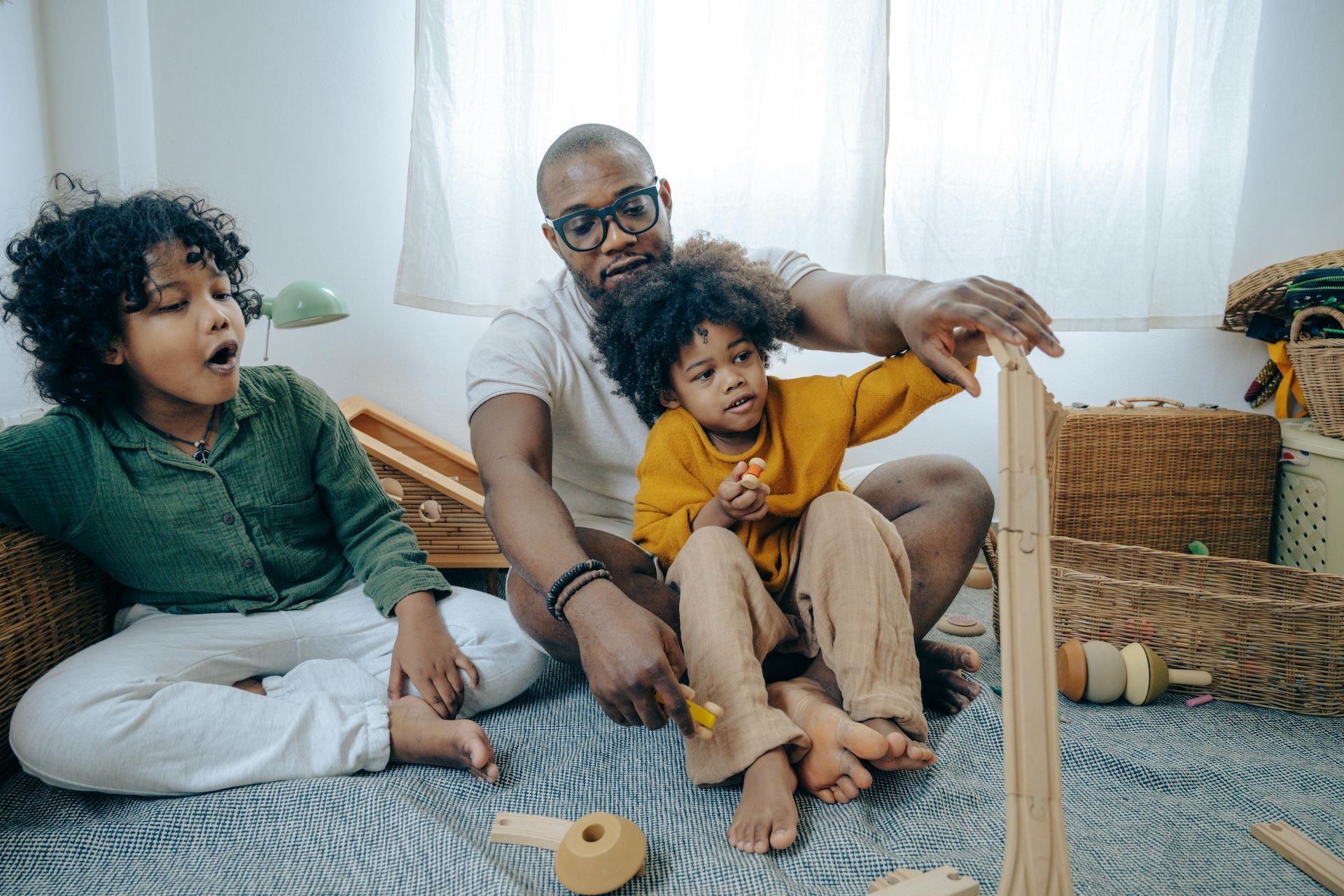
Have you ever stumbled upon your children acting out an imaginary scene? Perhaps you've found them "playing school" or witnessed them use a Lego person to boss a Beanie Baby around a bit. Play is a way for children to process and make sense of their lives.
They need play, and as Lawrence J. Cohen, PhD, so eloquently explains in his book, Playful Parenting, children need the adults in their lives to play too.
Filling the Emotional Bank Account
Let's be honest, though. Between feeling sapped from work or drained from the hustle and bustle of getting our kids from here to there, we don't often default to "let's romp around and have some fun." Instead, we're likely to feel a little annoyed when our children's play gets a little too rowdy, or when they don't want to stop to come to dinner. Yet by engaging playfully, we can actually create more closeness, cooperation, and confidence in our children.
If we think about how our children have emotional bank accounts, we can make deposits to those accounts, much as we do when we put money into our financial accounts. Those deposits can take the form of hugs, appreciations, reading together, and really whatever strengthens the connection. Withdrawals are those actions that weaken the emotional connection: sarcastic comments, failure to remember a promise, acting maliciously, and so forth.
The emotional bank account is a useful metaphor because it reminds us that connection is cumulative. When our emotional bank accounts are full, a little withdrawal here and there doesn't feel so bad because there's plenty of cushion in the account. But when our emotional bank accounts feel drained, a small withdrawal will feel even more hurtful.
Is Your Child's Cup Running Empty?
Cohen has a similar description in terms of establishing our connection with children. He describes how children (and really adults, too) need their cups filled. A child's need for attachment is like a cup that gets emptied by being tired, hungry, hurt, or lonely, and then refilled by being loved, cuddled, encouraged, and even fed.
Cohen suggests looking at children's behavior and thinking about these "cups." Is a child running around desperately trying to get a refill? Is she bouncing off the walls in the process and even spilling what little is in her cup? Does a child have a leaky cup, always needing more attention but never feeling satisfied? Is the child who really needs a refill blocking others from giving him just what he needs to feel better?
When our children need their cups refilled or deposits in their emotional bank accounts, it's time for us to re-establish connection. And a very effective way to rekindle that connection is through play.
Follow the Giggles
The play doesn't have to be elaborate, though Cohen advocates that working toward extended playtime with our children will create healthier family environments for all of us. Really, though, the playfulness can be as simple as acting a little silly. Cohen's tenet is to "follow the giggles."
It's actually pretty amazing how effective following the giggles can be, even for those of us who have a hard time letting ourselves go in the playful department. One of Cohen's suggestions is to reverse the roles we typically play. Instead of being the one who doles out reminders about what needs to happen, we can try to stamp our feet and whine that we don’t want to clean up. Sure, we might feel a little goofy right after, but when we hear our kids start to giggle and we know we are on the right track.
We can use the experience to try one of Cohen's other suggestions: to weave in alternatives for how a particular situation can play out (no pun intended!). In the example, after we whine and moan about cleaning up, and our child (playing along, of course) says that clean up absolutely had to happen, we can pout a little but then shift gears, "Okay, okay. I'll pick up my things." Reversing the roles offers an opportunity to suggest, without having to lecture or be didactic, a new storyline for how our children can respond to a clean-up reminder.
Playfulness as Proactive Discipline
Cohen's work on playful relationships with children really extends how we can approach discipline. First, playfulness is proactive. We're filling cups so children don't resort to unpleasant behavior to get our attention. But there's more to the playful approach.
Another of Cohen’s suggestions is to have a "meeting on the couch." Rather than launch into a reactive, habitual response, we can call for a couch meeting. This is a great strategy to implement when sibling rivalry has erupted for the umpteenth time. At first, our kids might not know how to respond. Even the mention of couch-time, though, can diffuse the intensity of the moment. The couch symbolizes snuggles and comfort, not harsh discipline. And that's the point. Being together on the couch can help everyone relax. We might find ourselves better able to sit back and listen. Our children might be better able to share ideas. The next thing we know, our children are back playing again, happy with the arrangement they negotiated.
Cohen's book, Playful Parenting, is full of valuable tools like these.
A Note on Montessori and Play
It is worth mentioning, though, that in the last paragraph of the book, Cohen takes a Montessori quote out of context. In an email exchange, Cohen graciously admitted that he wished he hadn't misunderstood Dr. Maria Montessori's words about work and play.
Dr. Montessori's writings about work and play have many subtleties. She wanted to emphasize that children are drawn to meaningful activities, and using the term "work" rather than "play" helped validate their choices.
Despite this minor misuse of Montessori's words, Cohen’s book is highly applicable to Montessori families. The essence of Montessori philosophy is about respecting our children, recognizing what they need from their environment, and following their lead.
This is exactly what Cohen advocates, too. His insight into how we can approach interactions and connections with lighthearted yet meaningful play can benefit us all. For more information about Cohen's work visit:
www.playfulparenting.com. To learn more about Montessori and how this approach aligns with what we do in the classroom,
take a tour of our school in Oak Park, IL.