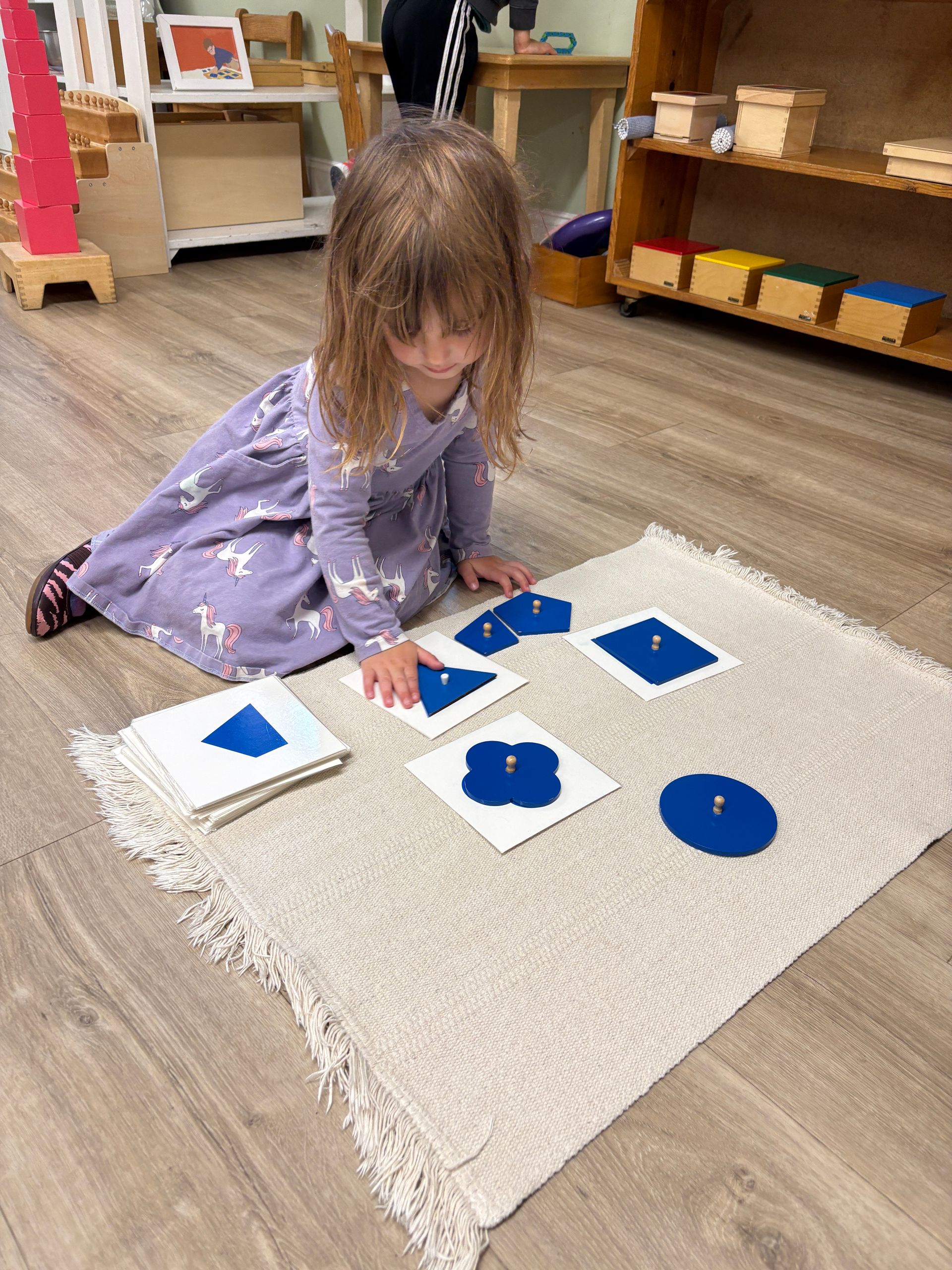
When Dr. Maria Montessori was developing her educational method, she wasn’t just focused on classroom academics. She studied the fundamental drives, instincts, and behavioral patterns that have shaped human beings across time and cultures.
Dr. Montessori recognized that certain core "human tendencies"—such as the drive for order, exploration, communication, and exactness—have guided our species since the very beginning, helping us adapt, survive, and thrive. When we recognize these innate drives in our children, we can prepare learning environments that don't fight against child nature, but flow naturally with it.
Here is a closer look at how these tendencies manifest in our daily work at West Suburban Montessori School, and how you might spot them in your child at home.
Orientation & Order: Building Security
- Orientation: For early humans, orientation meant survival—knowing where to find shelter, water, and safety. Today, both children and adults crave orientation when entering a new space or routine. In our Primary environments, the way children are warmly greeted each morning, where they place their coats, and the predictable rhythms of the daily work cycle provide the security they need to settle in and learn. At home, this shows up in trusted routines like bedtime stories or how breakfast is served.
- Order: Young children have an intense sensitivity to physical order. A predictable environment helps them make sense of the world. In Primary, every material has a precise place on the shelf. As children reach the Elementary years, order shifts into the mental realm: students love to classify animals, map history timelines, and organize complex ideas. At home, you might see this when a younger child lines up toy cars or an older child passionately debates the fair "rules" of a game.
Exploration & Movement: The Pathways to Learning
- Exploration: Curiosity is a constant drive. Young children explore through their physical senses, Primary children investigate their immediate environment, and Elementary students explore through research, big questions, and cosmic education. In our classrooms, exploration is hands-on—whether measuring the perimeter of the room or researching life in the Carboniferous period.
- Movement & Purposeful Activity: Humans are doers. Movement isn't a distraction from learning; it is the pathway into it. Montessori environments honor this by integrating purposeful movement into every lesson. Carrying heavy water pitchers, scrubbing tables, or walking the perimeter of a bead chain allows children to experience what Dr. Montessori called "work as love made visible."
Self-Control & Repetition: The Search for Mastery
- Self-Control: Inner discipline grows naturally when children are given real responsibility. Waiting for a popular material to become available, speaking in a quiet classroom voice, or practicing social grace and courtesy helps children build self-regulation. We see this inner calm blossom when a child achieves deep concentration during a work cycle.
- Repetition: A Primary student repeating a pouring exercise 30 times isn't just playing—they are building neural pathways and seeking mastery. Older children show this tendency through elaboration: diving into giant, multi-digit multiplication problems simply for the joy of testing their endurance.
Imagination & Abstraction: Expanding the Mind
- Imagination: In Elementary, imagination expands exponentially. Students aren't just absorbing what is directly in front of them; they are imagining ancient civilizations, deep space, and microscopic atoms. Our curriculum taps into this by offering the universe itself as a framework for learning.
- Abstraction: Abstraction is the ability to grasp an idea without needing to touch it. Children move toward abstraction only after being thoroughly grounded in concrete, hands-on experience. Montessori materials are designed as "materialized abstractions"—allowing children to build concepts with their hands first so they can hold them in their minds forever.
Communication & Belonging: Connecting with Others
- Communication: Language, art, and music are how we share knowledge and express our inner lives. In our prepared environments, children have the freedom to converse, collaborate, and share ideas respectfully, turning the classroom into a vibrant social community.
- Belonging: At the heart of it all is our fundamental need to belong. Classroom responsibilities, shared meals, peace gatherings, and collaborative group work reassure children that they are valued members of the WSMS family.
Why This Matters for Parents and Guides
Understanding human tendencies reminds us that true education isn't about pouring information into a child. It is about preparing an environment that nurtures what is already inside them.
When Dr. Montessori advised educators to "follow the child," she didn't mean allowing children to wander aimlessly. She meant paying close attention to these deep, universal drives and offering meaningful work that satisfies them.
When a child’s natural tendencies are honored, they don't just acquire academic skills. They grow into confident, self-directed individuals who can orient themselves in a changing world, explore with curiosity, build with order, imagine boldly, and belong with others in peace.
Seeing the Tendencies in Action
For our WSMS parents, observing these human tendencies in real time is one of the most rewarding aspects of the Montessori journey. We invite current families to schedule a classroom observation through the school office this semester to watch how our guides curate environments that honor your child's natural drive for independence and growth. Prospective families,
schedule a tour today!