When parents research Montessori education, it is easy to focus first on academic outcomes. In fact, an August 2023 meta-analysis of 32 studies highlighted that students in Montessori programs consistently demonstrate higher performance in language, mathematics, general academic ability, and executive functioning compared to peers in traditional settings.
Academic vigor is a hallmark of the Montessori approach, but intellect is only one part of raising a whole, capable child.
At West Suburban Montessori School, we know that social-emotional development during the elementary years is just as vital. As children move into Lower Elementary, their focus shifts dramatically from the individual work of early childhood to the complex, exciting world of social connection. Rather than pushing against this natural developmental drive, our environments harness it, giving students a safe space to build, test, and refine their social intelligence.
Harnessing the Power of Collaboration
Around age six, children undergo a major psychological shift: they become deeply social, gregarious beings. They no longer want to work in isolation; they want to do things together.
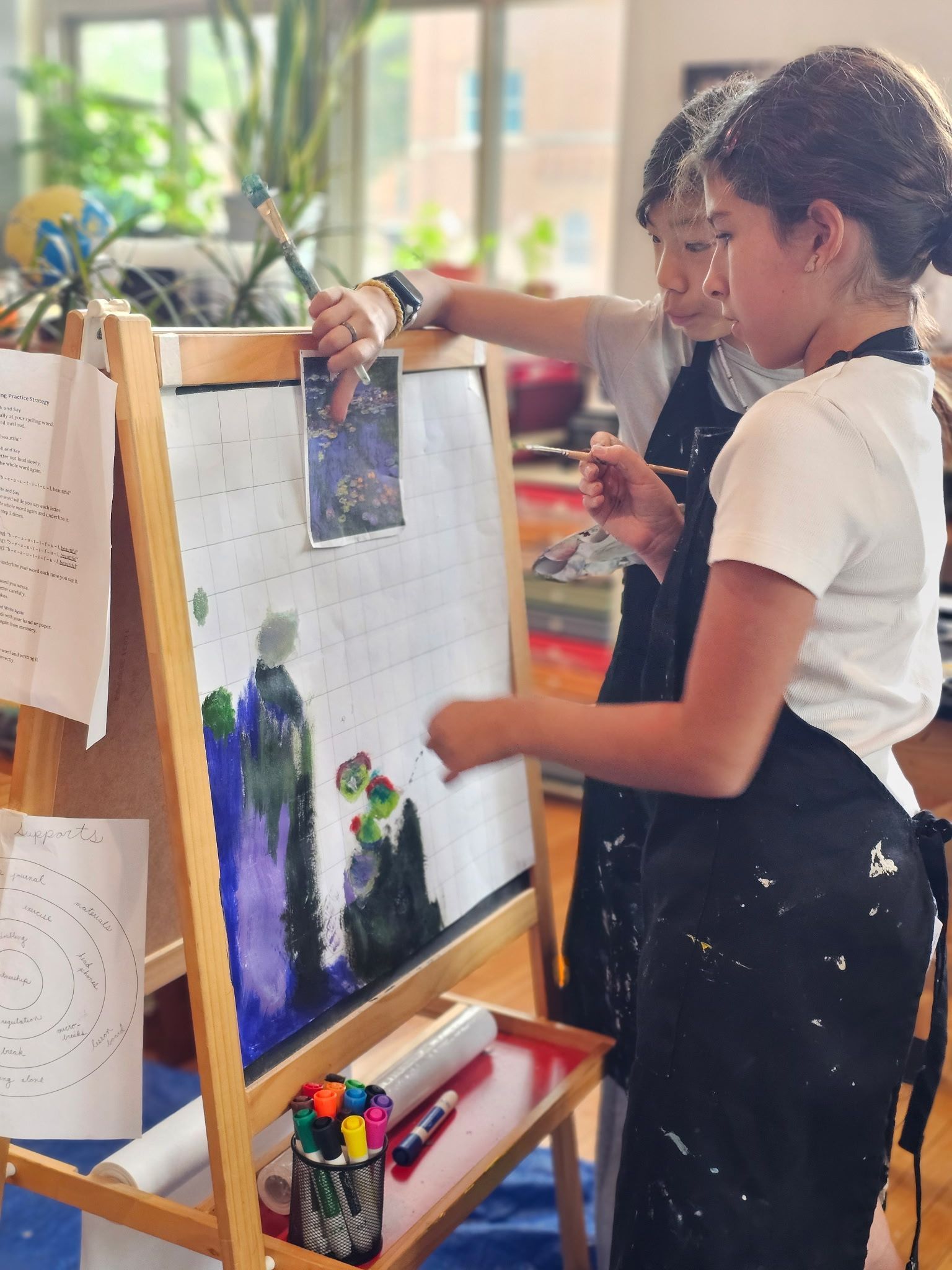
In our Lower Elementary environment, group work is an integral daily experience rather than a special project. In working collaboratively, students practice essential communication skills, learn to navigate differing opinions, and discover how to uplift one another.
By prioritizing collaboration over competition, children learn that working together takes them further than working in isolation. Each child comes to recognize not only the power of the team, but the genuine fulfillment that comes from belonging to a supportive community.
The "Practice Society": Learning Through Experience
We often describe the Montessori elementary classroom as a practice society.
It is a "practice" society because children are learning skills they have not yet mastered. Creating a healthy community takes effort, trial, and error. There will naturally be moments of misunderstanding, hurt feelings, or disagreement as children navigate group dynamics.
Unlike traditional settings where social friction is often managed by adult intervention or dismissed as a distraction from academic time, WSMS guides protect the time and space needed to help children navigate these moments. Conflict resolution, active listening, and restorative conversations are woven into our daily routine. We view these social hurdles not as disruptions, but as core educational moments.
The word society comes from the Latin root for companion—implying friendly, purposeful association with others. Through meaningful classroom jobs, shared research projects, and community care, our students learn what it takes to ensure everyone’s needs are met cooperatively.
Inspiration and the Role of "Hero Worship"
Elementary-aged children possess a natural reverence for strength, skill, and moral courage. They look toward heroes—historical figures, scientists, artists, leaders, and even non-human entities in nature—to figure out who they want to become.
In our environments, we introduce a wide tapestry of historical and modern figures through rich storytelling and research. Looking to heroes helps children explore their own potential:
- Recognizing Individual Strengths: Students become remarkably observant of one another's talents. They begin inviting specific classmates to join projects based on their unique strengths—one classmate might be a gifted illustrator, another a methodical writer, and another a confident presenter.
- Feeling Truly Seen: Because peer collaboration honors varied strengths, every child feels valued for what they bring to the group.
- Developing Leadership and Followership: Stepping into leadership roles in a practice society means learning both how to guide others and how to support a leader. Children experience the joy of working toward a shared goal larger than themselves.
Solidifying Skills in a Mixed-Age Community
Our multi-age classrooms provide a natural relief from the pressure of same-age social comparison. In a mixed-age Lower Elementary environment, learning flows fluidly across age lines. Older students consolidate their knowledge by mentoring younger peers, while younger students are inspired by the advanced work happening around them.
Through daily interaction, students practice:
- Patience and Active Listening: Learning to hear different perspectives and adjust communication styles for younger or older peers.
- Time Management and Prioritization: Planning large group research projects, assigning tasks, and meeting self-imposed deadlines.
- Self-Advocacy: Interacting with guides as partners and allies, preparing children to speak confidently with adults both inside and outside of school.
Preparing Whole Human Beings
We see the lasting impact of this social construction in how WSMS students navigate the broader world. They grow into articulate, empathetic, and resilient individuals who know how to ask thoughtful questions, seek help when needed, and contribute meaningfully to any group they join.
When you walk through our doors, you see more than children learning math or history—you see young people learning how to live and thrive together in harmony.
We invite you to
schedule a tour.