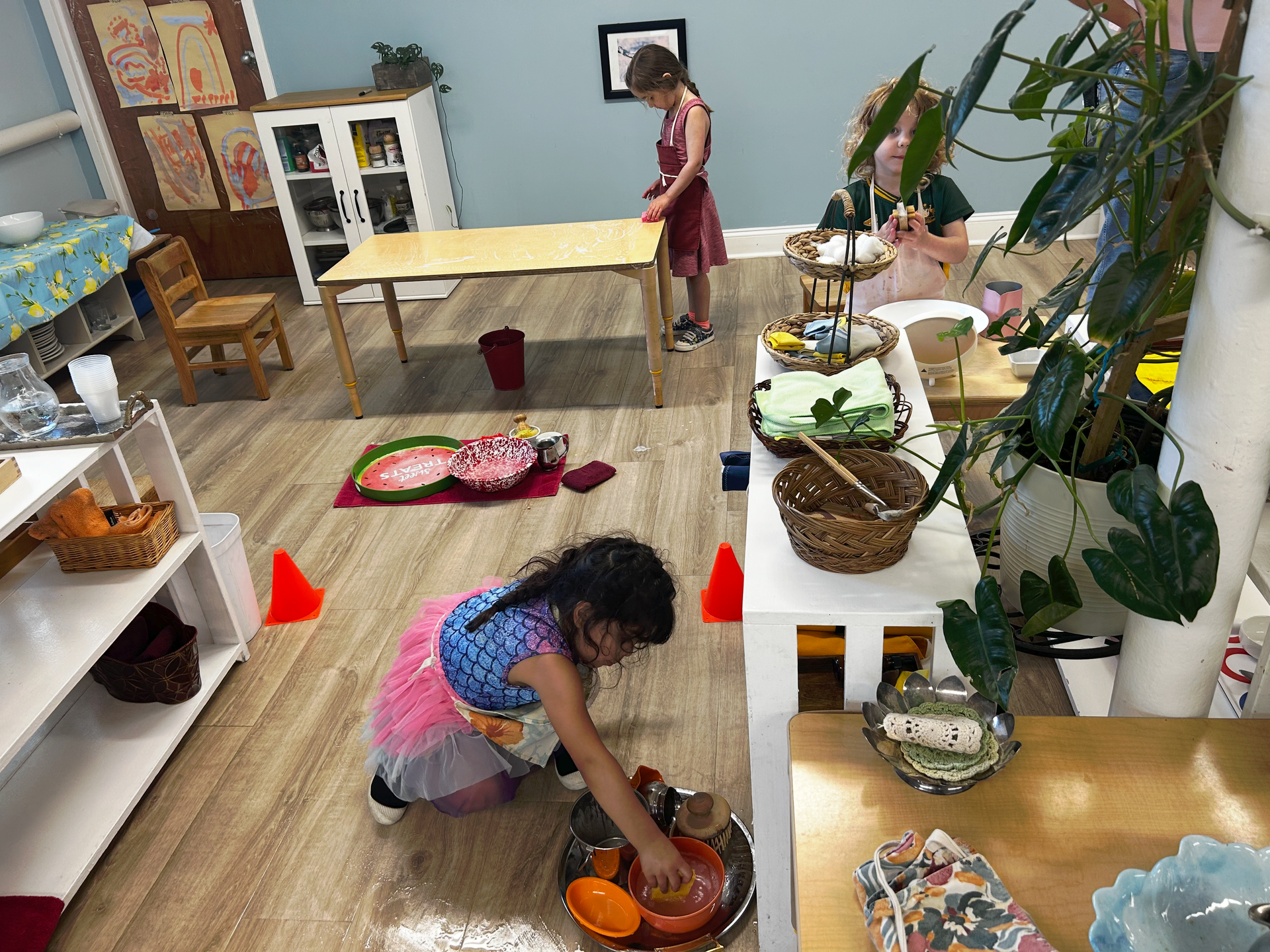
Part of being an active, valued member of any community is participating in the daily routines that care for our shared surroundings. At West Suburban Montessori School, we provide numerous opportunities for children to step into this role naturally every single day.
Children have an innate desire to help care for their space through real, meaningful activities. In the physical process of maintaining their classroom, our students develop a deep sense of security and belonging. This is how the classroom truly becomes their home away from home.
Laying the Groundwork Behind the Scenes
In order for children to be successful in caring for their surroundings, our guides do an immense amount of behind-the-scenes preparation. We ensure that all cleaning and maintenance materials are real, functional, and perfectly child-sized.
Because young children thrive on repetition, we also ensure they can work with these materials for as long as their internal drive requires. This means preparing the environment with the exact right amount of polish for cleaning mirrors, heavy glass vases for arranging fresh cut flowers, or small, easily wrung cloths for wiping down tables.
Real Work with Real Outcomes
The practical life activities we provide are never artificial busywork. The outcome of each task must be clear, visible, and genuinely necessary for the community to function. If a classroom plant is dry, a child waters it. If water spills on the floor during a work cycle, a child mops it up. If a tabletop is sticky after an art project, a child scrubs it.
Because our young people are discovering how much impact they have on their world, adults work hard never to redo what a child has just finished. If a table is still slightly damp or a spot was missed, our guides refrain from swooping in to "fix" it. Redoing a child's work sends a silent message that their effort wasn't good enough. Instead, the guide lets it be, knowing that perhaps later another child will notice the spot and choose to wash the table again.
From Personal Satisfaction to Community Impact
When children first learn these care of the environment activities, they pursue them out of pure personal satisfaction. A Primary student will wash a table simply to enjoy the sensory process of creating soapy bubbles and wiping them away.
As they grow, however, a beautiful shift occurs. They begin to realize that their efforts benefit everyone. They move from washing a table for the sensory experience to scrubbing a table because they see it is dirty and want their classmates to have a clean space to work.
This realization brings children immense joy. They love knowing they are contributing to the greater good. To foster this awareness, it can be wonderful to acknowledge a child's contribution at the end of the day. However, we always tread lightly, offering quiet validation rather than excessive praise so that the child's motivation remains internal and tied to the community rather than to adult approval.
Natural Consequences and True Responsibility
Ultimately, these daily tasks help children learn deep responsibility. If a classroom plant needs water and no one chooses to step in and care for it, the plant will eventually begin to droop. We offer the opportunity to care for the living things in our space, but if the work is neglected, the consequence is natural and tangible. Through these real-world feedback loops, children learn that their actions matter, taking great pride in being genuinely capable contributors.
Before introducing any of these activities, our guides practice the exact movements themselves to ensure the presentation flows logically and removes any unnecessary frustration. Once presented, we step back and observe, constantly refining the materials to better serve the children's independence.
Bringing the Experience Home
Parents frequently ask how they can support this aspect of the Montessori experience at home. One of the absolute best ways is to invite your child into your daily household care routines.
Children don't need elaborate setups at home; they just need accessibility. You can support them by offering:
- A low, accessible hook or basket for their laundry.
- A specific bottom shelf or drawer in the kitchen with items they can reach to help set the family dinner table.
- Designated, low shelves for toys so cleanup is straightforward and predictable.
When showing your child how to do a household task, remember to slow down. As adults, we move through chores automatically without thinking. Young children are still mastering their physical coordination. When you present a task, isolate your movements, slow your hands down, and let them see each step clearly.
Through this shared, meaningful work, children develop an unshakeable sense of significance and belonging. They realize that their presence and their contributions truly matter to the people around them.
We invite you to schedule a campus visit this year to see firsthand how even our youngest students care for their classrooms with pride, purpose, and joy.